Step-by-step guide on "How to build a content marketing strategy"... (Content Marketing Explained)
Content Marketing
Content marketing is a marketing strategy used to attract, engage, and retain an audience by creating and sharing relevant articles, videos, podcasts, and other media. This approach establishes expertise, promotes brand awareness, and keeps your business top of mind when it’s time to buy what you sell.
What is content marketing?

The consistent use of content marketing establishes and nurtures relationships with your prospective and existing customers. When your audience thinks of your company as a partner interested in their success and a valuable source of advice and guidance, they’re more likely to choose you when it’s time to buy.
If you want to learn more about content marketing, check out the following videos:
https://youtu.be/6Oj6GoYrF-s from Simplilearn.
Why it’s important
Content marketing is a go-to tactic that’s proven to work. Also, it provides a competitive advantage. Take a look at what the data says about content marketing:
- Businesses with blogs get 67% more leads than other companies.
- Forty-seven percent of buyers view 3 to 5 pieces of content before engaging with a sales representative.
- Companies that use content marketing see approximately 30% higher growth rates than businesses not using it.
- Seventy-two percent of business-to-business (B2B) marketers say content marketing increases engagement and the number of leads they generate.

How to get started with content marketing
Content marketing can feel overwhelming, but it doesn’t have to be. A successful content marketing campaign should be manageable and sustainable. Take these steps to get started:
- Identify your audience. To create content for a particular reader, you need to have a clear idea of their priorities, challenges, and preferences. If you have detailed descriptions of your various segments, choose 1 or 2 to write for. Otherwise, craft profiles of your audience members and prospects before starting.
- Determine the right formats. The right format corresponds with what stage of the sales cycle you’re creating content for. Another important consideration includes what formats will best help you showcase value. For some, this will be a video; for others, a checklist.
- Decide who will write, edit, and proofread your copy. An audience will judge your content on its quality, and they should. Identify the right resource, internal or external, to create this work. Regardless of who creates it, hire a professional proofreader to review anything before it goes out the door.
- Determine how you’ll distribute. Will you post content on your site, email it to people, or print it for an event? Start with “where” you know your audience is likely to be, and choose formats that make sense. For example, an article makes sense to send via an email, a checklist or worksheet can be posted on social media, and a buyer’s guide is a good follow-up to a pitch.
- Choose a sustainable schedule. It’s easy to make a content marketing plan that’s overly ambitious. Once you know the target readers and the formats, create a short-term (3-6 months) plan for a realistic number of content elements you can create, based on your budget and resources. Keep track of how long it takes you to create each piece of content so that you can build that time into your schedule.
- Follow best practices. Compelling content is clearly written, without the jargon that only you and your peers will know. It should also include how-to advice. A short, relevant, actionable piece of content is best.

Step 1. Your Mission and Your Goals
A good starting point for your content strategy plan is to set out a content marketing mission statement. This is a brief statement that makes it easier to focus on what’s important – and what’s not – in creating your content so your content marketing strategy stays on track.
A content marketing mission statement includes:
- Your target audience
- The content you’ll use to reach them
- The benefit they’ll get
Here’s an example from CIO.com’s about page.

It defines the audience (CIOs and business technology executives). It highlights the benefit (insights on career development). And it gives examples of what its content covers (certification, digital transformation, skills development, and hiring practices).
To create a mission for your own business, try this formula:
We provide [target audience] with [type of content] to help them [business goals].
Business goals include:
- Improving revenue
- Making more sales
- Getting more traffic
- Gain influence and authority
- SEO success
- Reduced marketing costs
- Social media engagement
Once you know your goals, it’s time to move to the next step.
Step 2. Establish Your KPIs
The best way to achieve goals is to make them specific and measurable. That means setting key performance indicators (KPIs) for your content marketing strategy.
The KPIs will help you know when you have achieved your goals by providing milestones you can check off. They’ll include what you plan to achieve in terms of revenue, sales, traffic, SEO, traffic, and different aspects of digital marketing like email marketing and social media metrics.
If you want to understand the basics and fundamentals of digital marketing then click on the following link:
https://digitalsnmarketing.blogspot.com/2022/03/things-to-know-about-digital-marketing.html
Typically, these will have specific numbers attached to them. For example, you might want to:
- Hit a certain revenue target
- Get more signups
- Get a certain number of new email subscribers
- Increase in site traffic
- Improve the search ranking
You’ll also want to pay attention to marketing expenditure, tracking your spending on different campaigns, and keeping an eye on the cost of acquiring leads and making sales.
Step 3. Know Your Audience
As mentioned earlier, for a successful content marketing strategy, you’ll need to be clear about who your audience is so you can create the right content to reach them. There are three actions you need to take.
Collect Demographic Data
The first step is to collect demographics on your visitors, email subscribers, and social media followers.
Web analytics, social media analytics, and email subscriber analytics will give you the data you need on your audience:
- Age
- Gender
- Education
- Income
You’ll also get insight into their key interests. To find this information in Google Analytics, go to Audience » Interests » Overview. You’ll see the market segments your web visitors fit into.
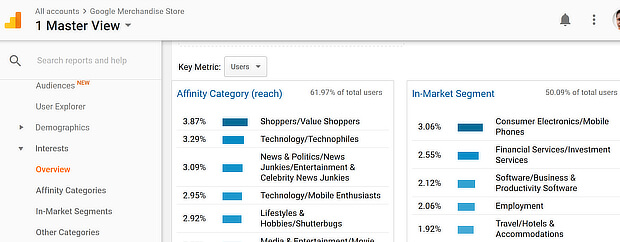
And if you use MonsterInsights, you can view all of this data in easy-to-understand reports right from your WordPress dashboard.

Social media sites offer similar data. For example, you can get demographic information on your Facebook fans via Facebook Page Insights:

Get Customer Feedback
To learn even more about your target audience, try collecting feedback from your current customers. That’ll give you insights into:
- How they feel about the content you’re currently producing
- What their most urgent needs are
- How you can address their problems with your content
Getting the right customer feedback can help you:
- Understand your readers’ and subscribers’ priorities
- Decide on the best places to reach your customers (see step 9)
- Flesh out your buyer personas, which we’ll talk about next
To easily collect customer feedback, you can create a survey with WPForms.
WPForms offers a drag and drop builder that makes customizing your survey super simple.
Plus, you can take advantage of other powerful features like interactive survey reports, smart survey fields, NPS surveys, real-time polls, instant notifications, and more.
Create Buyer Personas
When you have demographic data and customer feedback, you can create or flesh out buyer personas. Buyer personas, also known as customer avatars, describe your ideal readers and customers so that you can target content better.
The best customer avatars include information on your customers’ pain points, challenges, sources of information.
When you know all this, you’ll have a better understanding of:
- The kind of content your audience will respond to
- How it will help them
- What will make them care about it
Step 4. Assess Your Current Position
Many businesses already have content out there. This will include content that’s on your blog, as well as social media content, podcasts, videos, and so on.
That’s why the next step is to figure out whether that content is helping you to meet your goals.
To do that, you’ll need to carry out a content audit. That means:
- Logging all the pieces of content, such as blog posts, guest posts, and so on
- Assessing their usefulness or success
- Identifying the gaps
You may also want to look at how your content compares with that of your competitors, and see how any new content will fit in the market.
Let’s look at one example of how this would work for your content marketing strategy.
How to Log Your Content
If you want to log all your site or blog content, Screaming Frog is an excellent starting point. It’s a URL crawler that will:
- List URLs
- Analyze page titles and descriptions
- Find duplicate pages
- Create sitemaps.
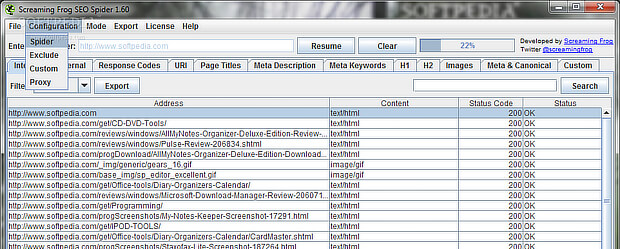
The free version crawls up to 500 URLs. SEER Interactive has an excellent, in-depth guide to Screaming Frog. As a bonus, you can also use this tool for competitive research, carrying out the same kind of analysis on your competitors’ content.
You’ll get a complete analysis of your content, including:
- Content titles and descriptions
- Content length
- Backlinks
- Social shares
Export the data to create a simple spreadsheet that contains all the URLs.
Step 5. Figure Out the Best Content Channels
As you work through this process, you’ll start to get a sense of where your audience is hanging out, and where you already have a successful online presence. It’s best to focus on what’s working and expand from there, rather than try to do everything at once.
But to be absolutely sure, you’ll need to take another look at web analytics. When you’re in Google Analytics, go to Acquisition » Social » Overview to see the main social networks where your content is being shared. For example, in our screenshot, most of the social activity takes place on YouTube.
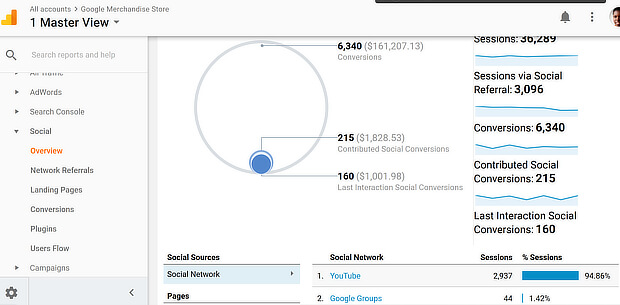
You can also use Buzzsumo to find similar data. Go to their Content Analysis tool and type your domain name into the onscreen search box. Press enter and you’ll see charts showing:
- Shares by network
- Shares by content type
- Shares by content length
- Top content in the past year
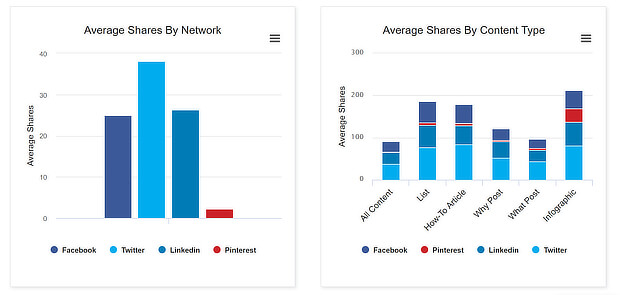
You can also refine your search terms for more detail.
With this information, you can easily decide which networks to target to get social media engagement and shares for your content.
Step 6. Decide on Content Types
Next, think about the types of content you need to create. There are some content types that every content marketing strategy will include.
Most successful content marketing strategies rely on having a central core of content published on your own site (or home base) which can then be repurposed and shared on other sites (outposts).
So blog posts are an essential part of your content marketing mix, and they still deliver strong results. Ideally, your blog posts will be actionable, valuable, and shareable, and may include a range of article types.
How to Map Content to Social with Buzzsumo
You can use the Buzzsumo tool mentioned above to map the types of blog posts you want to create to the potential for social shares to boost engagement and reach.
For example, OptinMonster readers really like how-to articles and lists. Click on a content type and a network to see a list of your most shared articles for that metric.
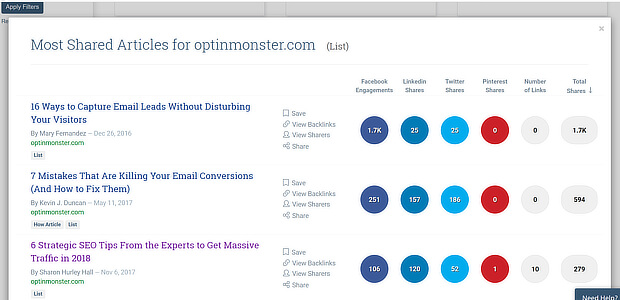
Of course, creating a successful content marketing strategy isn’t just about navel-gazing to get stats on your own site. It’s also about seeing what other successful content is out there that you can use for inspiration. Buzzsumo can help with this, too.
Using the same tool, type your topic into the search box. You’ll see sharing statistics from across the web. For example, one chart suggests that long-form content on content marketing is very popular:
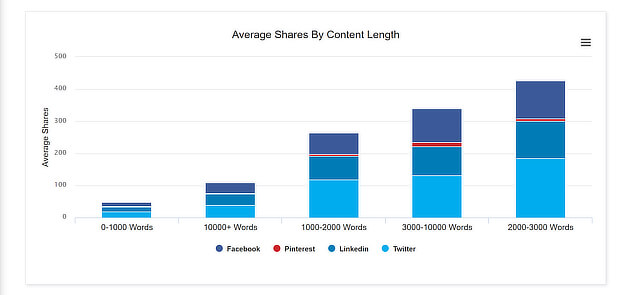
There are also data on the most shared domains publishing on this topic, and the top pieces of content shared relating to it.
Other Buzzsumo features allow you to track backlinks, trending content, and questions people ask, and the standard Buzzsumo search includes sharing data for videos.
Other Content Types
What other content should be included in your content strategy plan? As our own research shows, video marketing should be an essential part of any marketing, as it’s proven to engage your visitors to keep them on-site longer, improve lead generation, and reduce abandonment.
You’ll also want to include other types of visual content to improve engagement.
Consider creating infographics with tools like Piktochart and Canva, and using Canva and similar tools to create customized graphics and memes for social sharing, as Grammarly does.

Other content types to include for improving lead generation include lead magnets like webinars, e-books, checklists, worksheets, and more.
It’s also worth thinking about podcasting as a content delivery mechanism, as more than 40% of Americans now listen to podcasts.
The next step is to figure out what you need to create that content.
Step 7. Identify and Allocate Resources
Now that you know what type of content you’re planning to create, who it’s for, and where you’re planning to share it, it’s important to make sure you have everything you need to deliver on your content marketing strategy. That involves answering questions like:
- Who’s in charge of producing and maintaining content?
- What human, physical, or digital tools and resources do you need to create the content?
- What will your publishing workflow look like, including content scheduling?
Let’s look at each of these in more detail.
Who’s in Charge of Content Production?
This question is about allocating roles. You’ll need to think about who’s in overall charge, as well as who is responsible for delivering individual content items.
This will depend on the size of your company and content team, and on whether you’re doing everything in-house, or farming out content production.
One example of how this might look would be:
- The CEO or chief marketing officer has overall final approval over content and content strategy.
- Your content marketing manager will be in charge of delivering your content marketing strategy on a day-to-day basis and will work with the content team.
- Individuals will create content, according to their expertise.
What Tools and Resources Do You Need?
Next, figure out how you’re actually going to create the content. Your content producers might include:
- In-house content creators
- Specialists in video creation, podcasting, or graphic design
- Freelancers
One way to find great freelancers quickly is to return to your Buzzsumo search results, and see who’s written the top content. There’s no harm in approaching them to see if they’re willing to contribute to your content team. You can also find great freelance content producers through networks like Contently, NDash, ClearVoice, and similar.
You’ll also need equipment for podcasting and creating professional videos, and you’ll need to arrange for hosting on sites like YouTube, Vimeo, Spreaker, and Blubrry.
Content Workflow
Next, work out what your content production process is going to be. For example, for a typical blog post, you might have to:
- Create an outline and have it approved
- Write the post
- Create accompanying images
- Send the post to the editor
- Make any changes
- Upload
- Publish
There’s just one more thing to do before you get started on researching and creating pieces of content: creating a content calendar, so you know what’ll be published when. We’ll look at that in the next step.
Step 8. Create a Content Calendar
As part of your content strategy, you’ll need to know exactly when you want to publish your content on each of the platforms you want to use.
Lack of planning is a key content marketing mistake, so it’s essential to use a content calendar to get all your content scheduled. There are several ways to do this.
For example, you can use Google Calendar and simply put the due dates for each piece of content there. That works pretty well, especially if you’re not publishing a lot of content.
That’s the simplest approach, but if you’re publishing a lot of content, and have to manage a content team and the production workflow you’ve decided on, then you’ll likely want some more features.
Options for managing this include productivity and task management tools like Asana (shown below), or a purpose-built editorial calendar tool like CoSchedule. Both of these will allow you to schedule different parts of the content creation process.
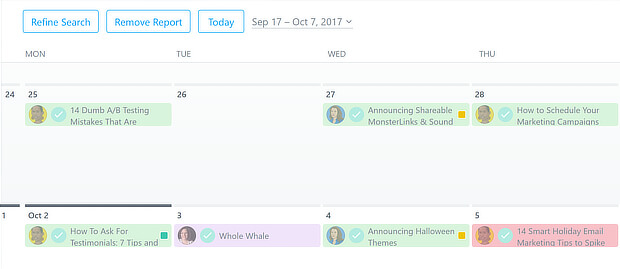
One way to find content to add to the calendar is to do some initial research to find the topics your audience will respond to.
Step 9. Create Content
As you’ve seen, there’s a lot of prep work in your content marketing strategy before you actually create a piece of content. But now it’s time to do just that. We’re going to use a blog post as our example, but these tips will work for almost any type of content creation.
With the research you’ve already done, you’ll have an idea of what type of blog post to create. For example, we know that list posts and how-tos are popular with our readers.
Now it’s time to pick a title from the content calendar and start working on it.
Research Your Content
When you’re ready to write, you’ll need to find out :
- What’s already out there
- How your new content can add value for your audience
This means doing a Google search, checking out the top content for your topic, and seeing how you can improve on it. That’s called the skyscraper technique.
Original research also does well, so consider this as an option if you’re collecting the right kind of data.
Include keyword research to identify the key terms to use for better SEO and improved search ranking. We cover this process in detail in our keyword research 101 guides.
Create the Content
Finally, start writing or creating your content. At this point, you’ll have to think about how to reflect your brand’s personality in the content you write.
You may want to be super-professional, very casual, or something in between. And you’ll have to manage the balance between showing your expertise and not patronizing your audience. Here’s Sprout Social’s advice on creating consistency with your brand voice, and keep in mind important SEO ranking factors to optimize your content. Take a look at these successful content marketing examples for inspiration.
Step 10. Distribute and Market
The next key part of your content strategy is distribution and marketing. That’s because you won’t get the results you want unless these are handled correctly. For example, you will likely:
- Set a schedule for sharing your content on social media, both immediately, and through a drip campaign via a tool like Missinglettr.
- Use email marketing to distribute your content to subscribers.
- Notify any influencers mentioned in your content to spread the word even wider.
OptinMonster is also a great tool to use for promoting your content, both on your site and via your email newsletter. For example, Olyplant used OptinMonster to increase pageviews by 157%.
Step 11. Measure Results
Finally, it’s time to assess the success of your content marketing strategy. To do this, you’ll return to those KPIs you set at the start of the content strategy plan, and see what’s changed and whether you’re hitting your targets.
To do this, you can:
- Check Google Analytics as described above to see how your content is performing
- Measure social sharing activity via Buzzsumo and other social analytics tools
- Look at OptinMonster’s conversion analytics dashboard to assess the success of your marketing campaigns
Other tools for tracking content marketing success include Google Alerts and Mention. Both of these will let you see if your content is being mentioned and shared, helping you hit those KPIs for awareness and engagement.
Tools like SEMRush will help you to assess KPIs for the search rank of your content. And you’ll be able to track email signups through the analytics in your email marketing software.
By monitoring your progress, you’ll be able to tweak your content marketing strategy at regular intervals, so it’s always up to date.
That’s it! Now you know how to create a successful content marketing strategy from beginning to end.
If you want to understand "How to build a email marketing strategy" then click on the following link:
https://digitalsnmarketing.blogspot.com/2022/03/step-by-step-guide-on-how-to-build_26.html
Comments
Post a Comment
If you have any questions regarding the topic, Please do let me know.